


Get professional architect invoice templates built for real-world billing. Each format parallels the invoicing options available in BQE CORE, with editable fields for phases, reimbursables, taxes, and more.
Inside this article:
- Different types of architect invoice templates
- Basic elements of any architecture invoice
- International invoice considerations for architects
- Easiest way to simplify architect invoicing
Benefits of an Architect-specific Invoice
An architect-specific invoice streamlines billing by matching how firms actually work: tracking phases, drawings, and reimbursable expenses across milestone, hourly, or fixed-fee contracts. Tailored templates clearly present fees, change orders, and approvals, creating a more professional impression and lessening confusion, late payments, and administrative work.
Many architecture contracts also require AIA or AIA-style progress billing, which standardizes how project phases, retainage, and change orders are documented.
The benefits of architect-specific invoices include:
- Built-in Architecture Workflows: Templates include typical project phases such as schematic design, design development, construction documents, and construction administration, plus sections for including drawings, site visits, and change orders.
- Support of Multiple Billing Models: Easily adaptable for milestone, cost-plus, hourly, or fixed-fee billing.
- Professional Presentation: Promotes trust through clear, itemized billing with specific, pre-designed content unique to the architecture field.
- Improved Record-keeping: Tracks hours, projects, and expenses consistently throughout teams or projects.
- Speedier Approvals and Payments: Clients receive transparent summaries of work completed and billing details.
Including secure e-payment links on invoices also streamlines the billing and payment process. According to BQE’s 2025 Architecture Firm Benchmarking Report, firms that offer digital payments collect on invoices 14% faster than those that only rely on traditional checks or wire transfers. Adding an e-payment link to your invoice improves cash flow and modernizes the firm-to-client experience.
Different Types of Architect Invoice Templates
Architectural projects vary widely in scope and structure, and billing should too. The right invoice depends on how the work is contracted and delivered: hourly, by phase, or as a fixed fee. These templates include fields specific to architecture, such as project phases, reimbursables, and retainage, giving you a clear, professional way to bill every client and project.
Architect’s Fixed-fee (Lump Sum) Invoice Template
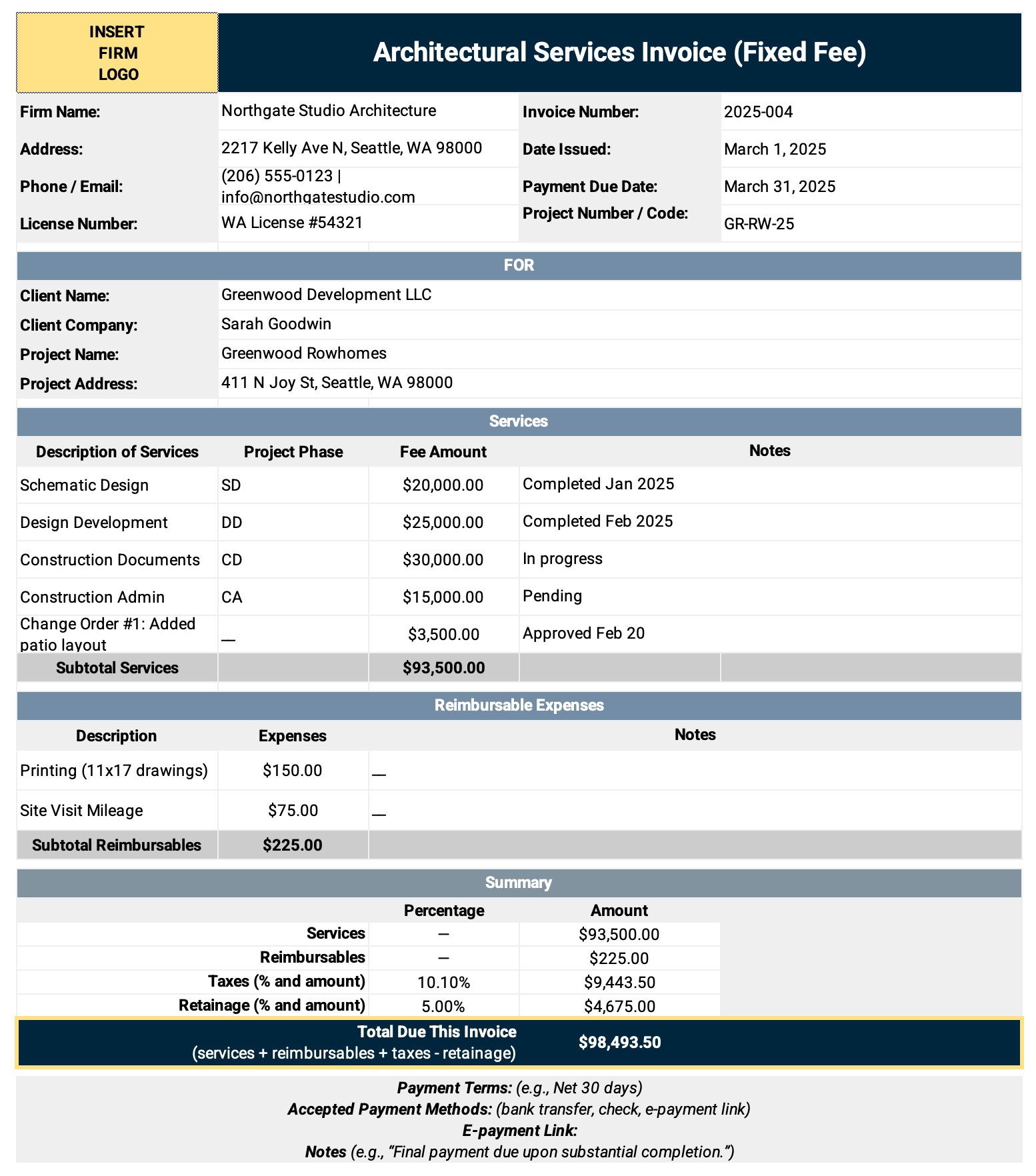
Example of a lump sum architectural services invoice.
Download fixed-fee architect invoice templates:Excel / Google Sheets
The architect’s fixed-fee invoice template is for use on architectural projects with a clear scope and a total fee agreed upon in advance. It is ideal for small design projects with simple parameters and for freelance architects who want a professional invoice option. Fixed fee contracts are also great for firms that deliver work quickly and efficiently, as the faster you deliver, the more profitable the project will be for the firm.
The template includes sections for project phases, the percentage of work completed, and retainage. You can also track change orders that fall outside of the initial fixed fee, making it a simple but flexible billing tool. If your contract includes reimbursable materials, you can also track lump-sum material billing. See the template’s second tab for an architectural fixed-fee invoice example.
Architect’s Milestone/Progress Billing Template
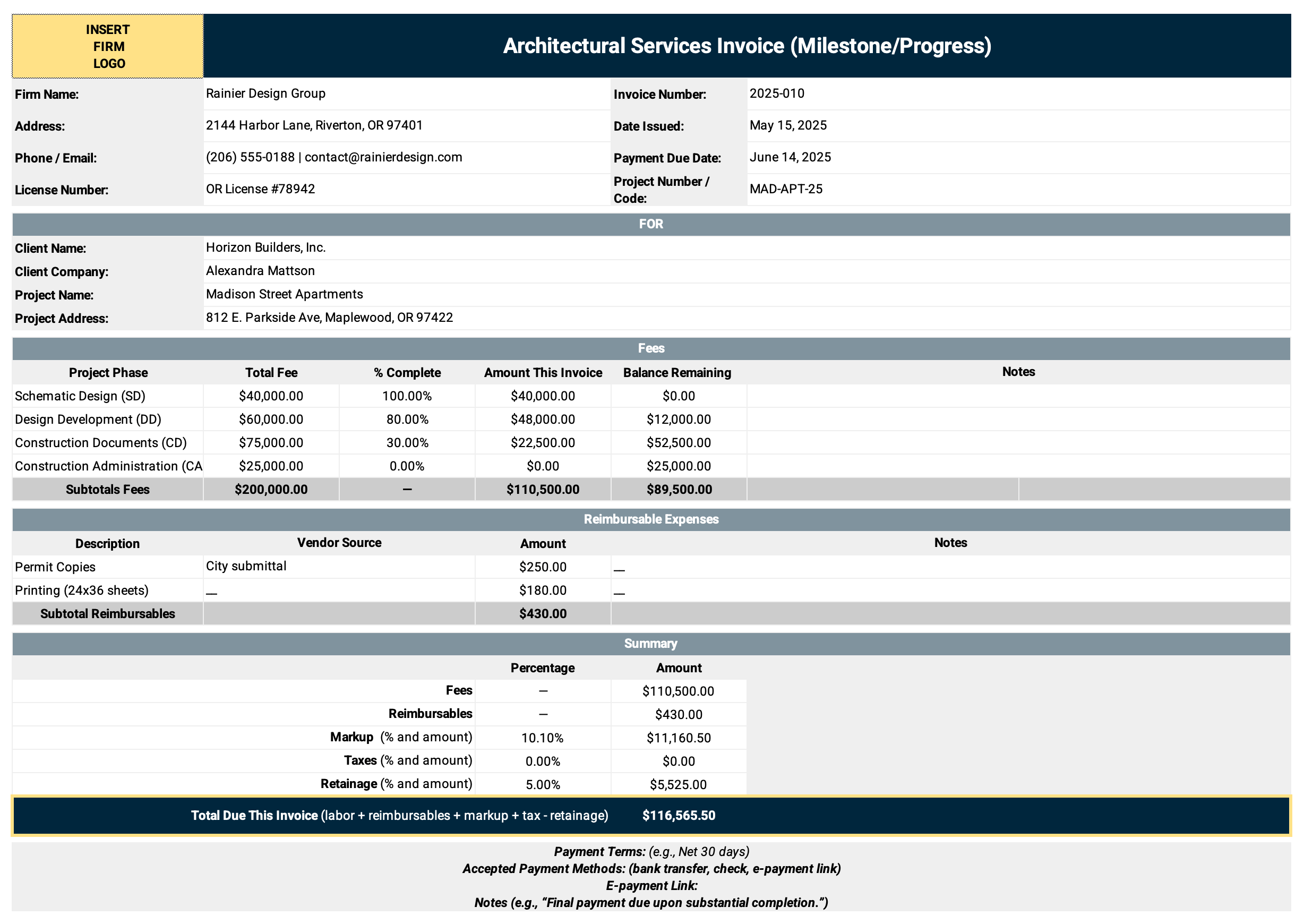 Example of an architectural services invoice using milestone/progress billing.
Download templates:Excel / Google Sheets
Use the architect’s milestone/progress billing template for larger, multi-stage projects that are billed by completion of specific milestones or design phases, such as schematic design, design development, construction documents, and construction administration. Clients make progress payments in the milestone structure. These progress payments often are made at 30-60-90 percent complete, or 25-50-75 percent complete.
This template has columns for each phase of the project, with percentage of completion, total fee per phase, and cumulative billing information. It also includes sections for notes on each phase, describing deliverables and other details. It also includes an example of an architectural milestone/progress invoice.
For more, see our guide to milestone billing and these additional progress billing templates and examples.
Hourly Invoice Template for Architects
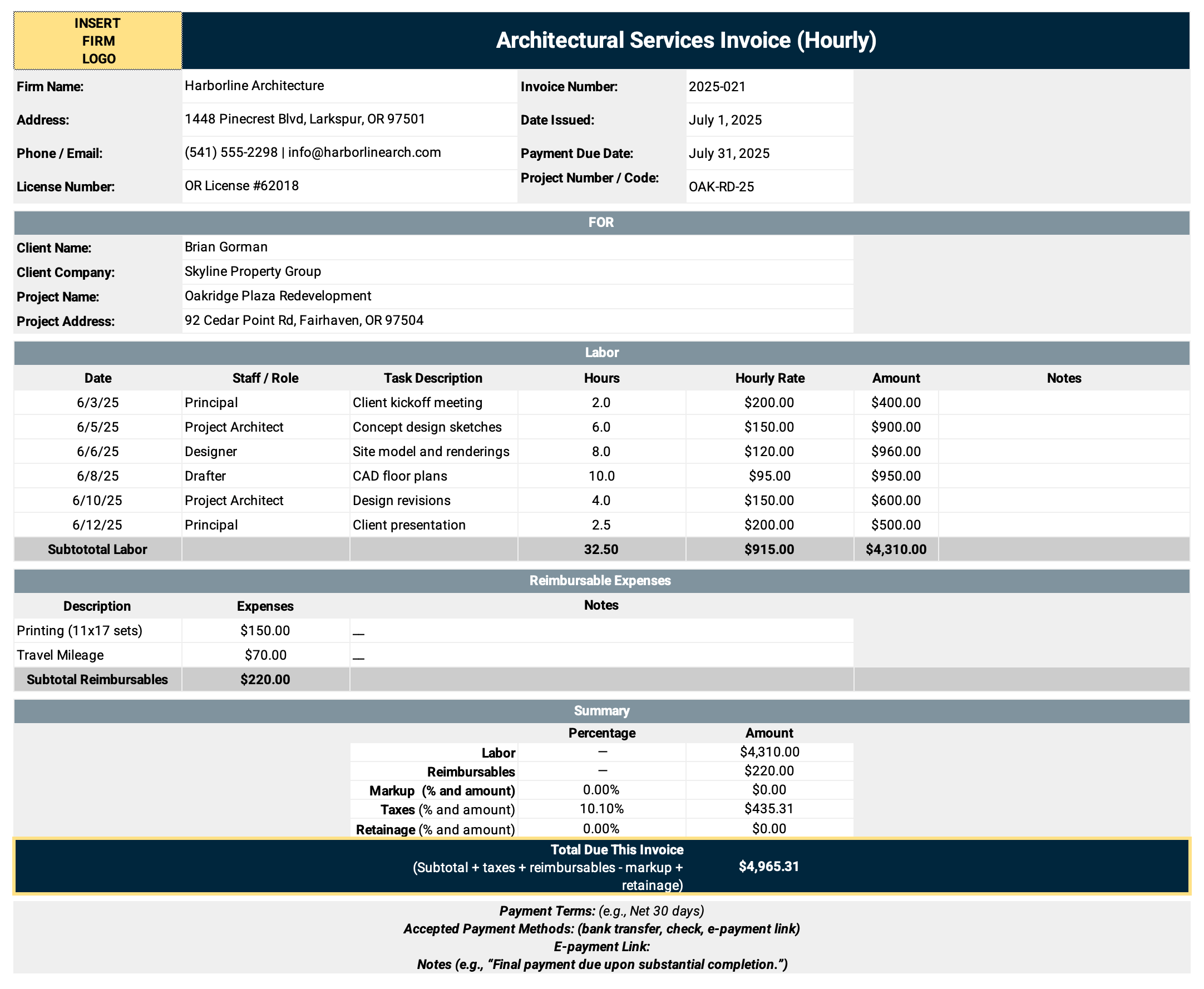
Example of an architectural services invoice using hourly billing.
Download templates:
Excel / Google Sheets
The hourly billing template for architects is designed for open-ended projects billed by the hour or with a scope that can shift as work progresses, as is common for feasibility studies, site analysis, or consulting. It isn't the recommended billing best practice, but it can be helpful in some limited situations. As firms mature and get more comfortable delivering work efficiently, and have developed standard operating procedures, systems, and processes, it is recommended that you shift to fixed-fee or a percentage of construction fee structures.
Break out hours by role or activity to give your client a clear view of what work has been done and who did it. Roles include principal, project architect, designer, or drafter. Customizable activities include meetings, drafting, modeling, and site visits. On the second tab, see the example of an architectural services hourly invoice.
Architect’s ‘Percentage of Construction Cost’ Invoice Template
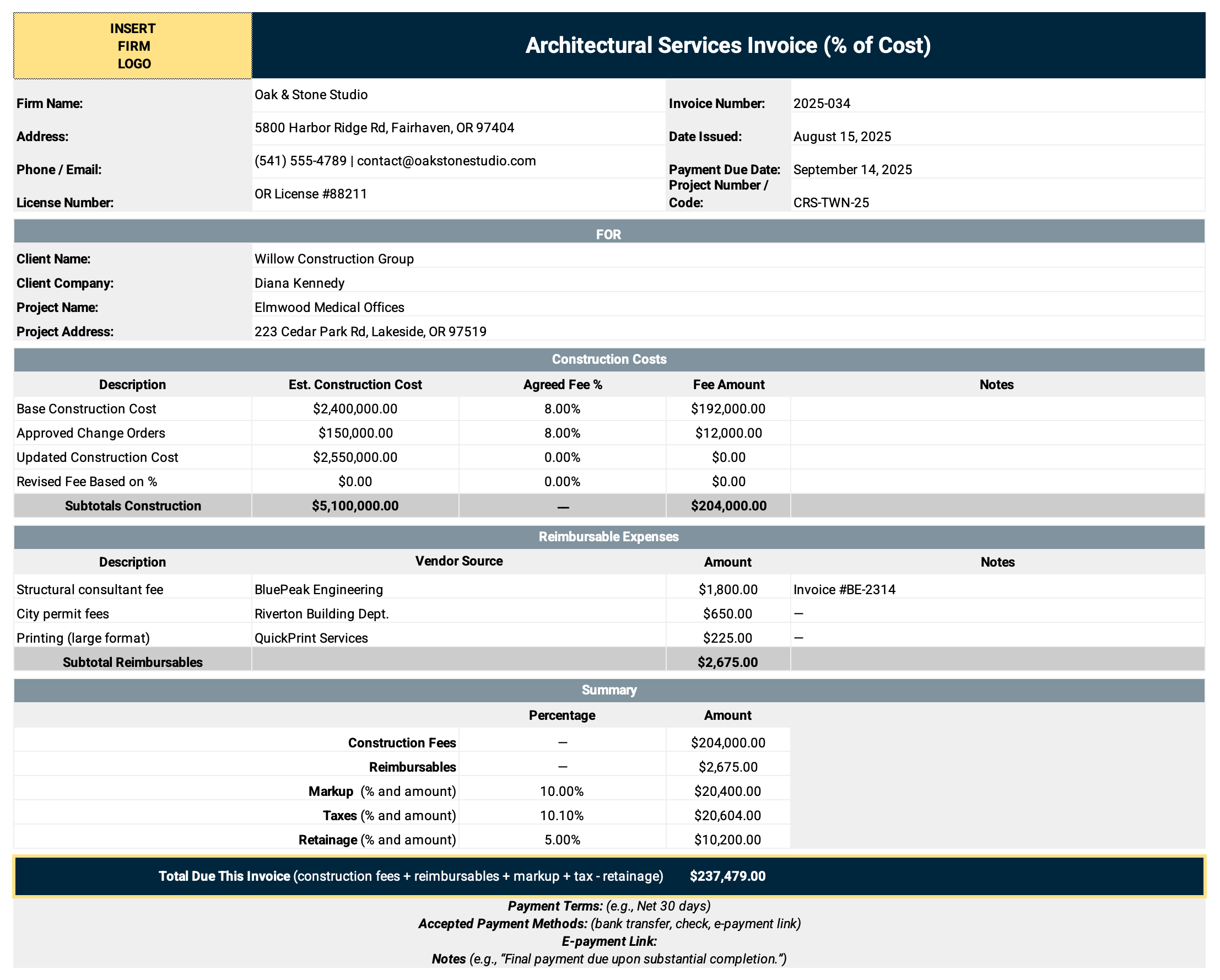
Example of a “percentage of construction cost” invoice for architectural services.
Download templates:
Excel / Google Sheets
The “percentage of construction cost” invoice template for architects is used when fees are based on a percentage of the total construction budget. This is common for full-service architecture contracts, particularly on larger-scale projects.
With sections that include estimated construction costs, an agreed percentage, and progress-based adjustments, this versatile template is perfect for projects and clients of all types that use a percentage billing method. It also tracks changes in construction costs as the project progresses. On the second tab, see the example of an architectural services percentage-of-cost invoice.
Architect’s Cost-Plus Invoice Template
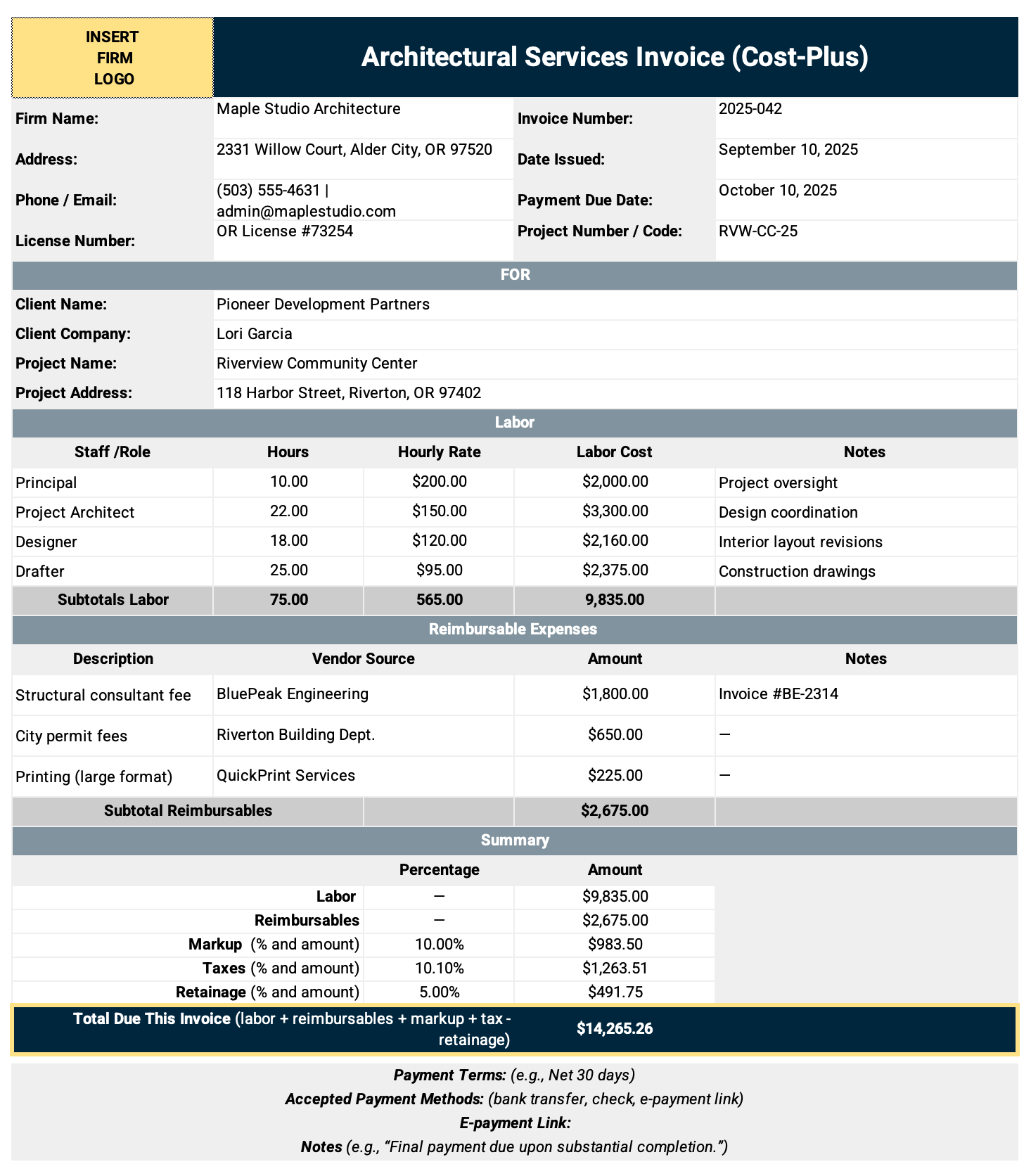
Example of a cost-plus architectural services invoice.
Download templates:
Excel | Google Sheets
Use the architect’s cost-plus invoice template when a client is meant to reimburse actual project costs with a service fee, which is typical for architecture projects with shifting scope or variable subcontractor expenses.
The template separates reimbursable expenses, such as travel, printing, permits, and consultants, from other labor fees. It includes markup percentage fields and additional space for receipts or other documentation, and a line for any discounts applied to services or materials. It also included an example of a cost-plus invoice for architectural services.
Architect’s Retainer & Change Order Invoice Template
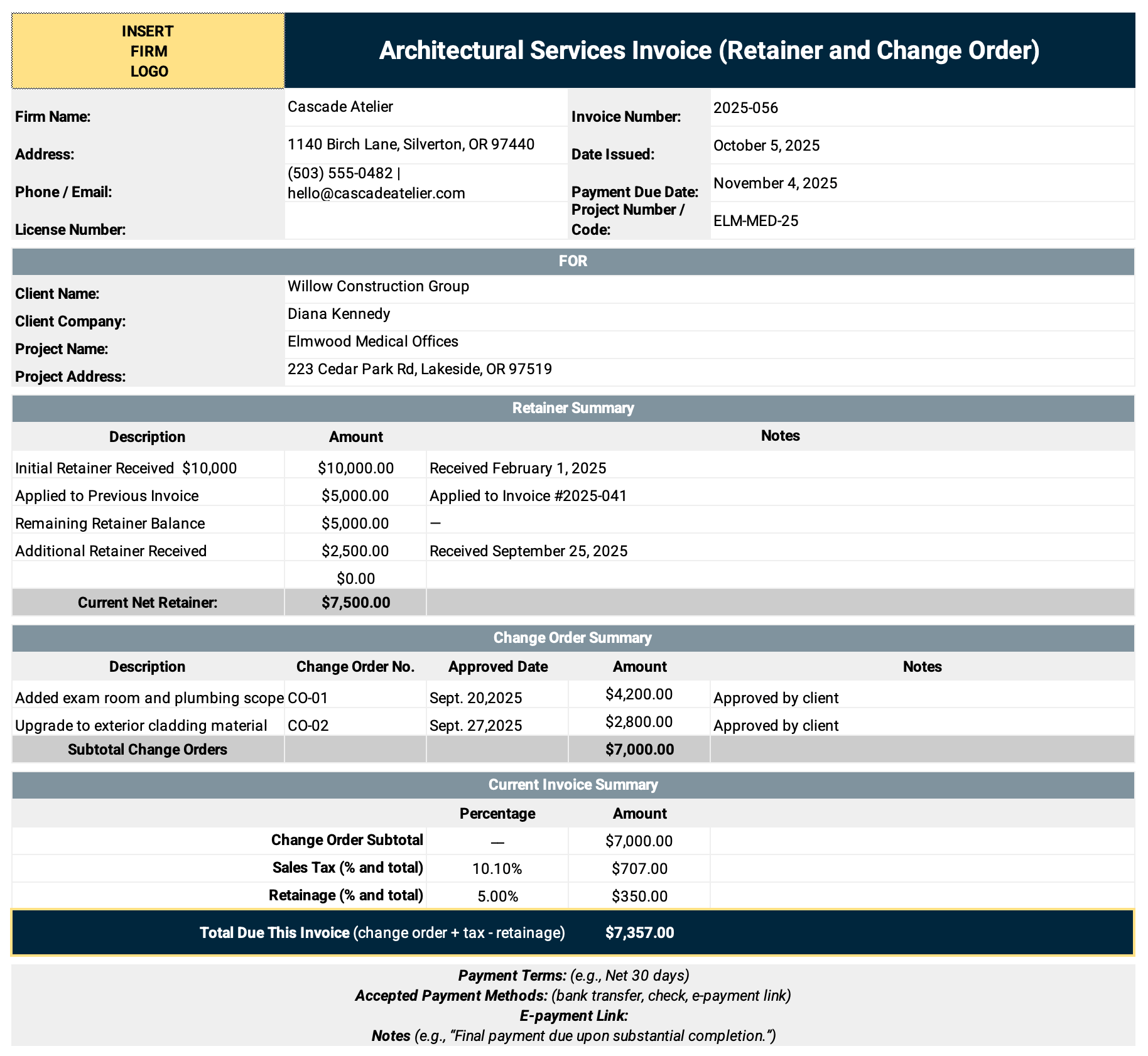
Example of an architectural services invoice showing a retainer summary and change orders
Download templates:
Excel / Google Sheets
The retainer and change order invoice template for architects is best for collecting upfront retainers and deposits at the project’s outset, or to bill for approved scope changes during your project.
The template shows remaining retainer balance, new work from change orders, and updated project totals. It also indicates deposits applied to future invoices. On the second tab, see the example of the architect’s retainer & change order invoice.
UK VAT Invoice Template
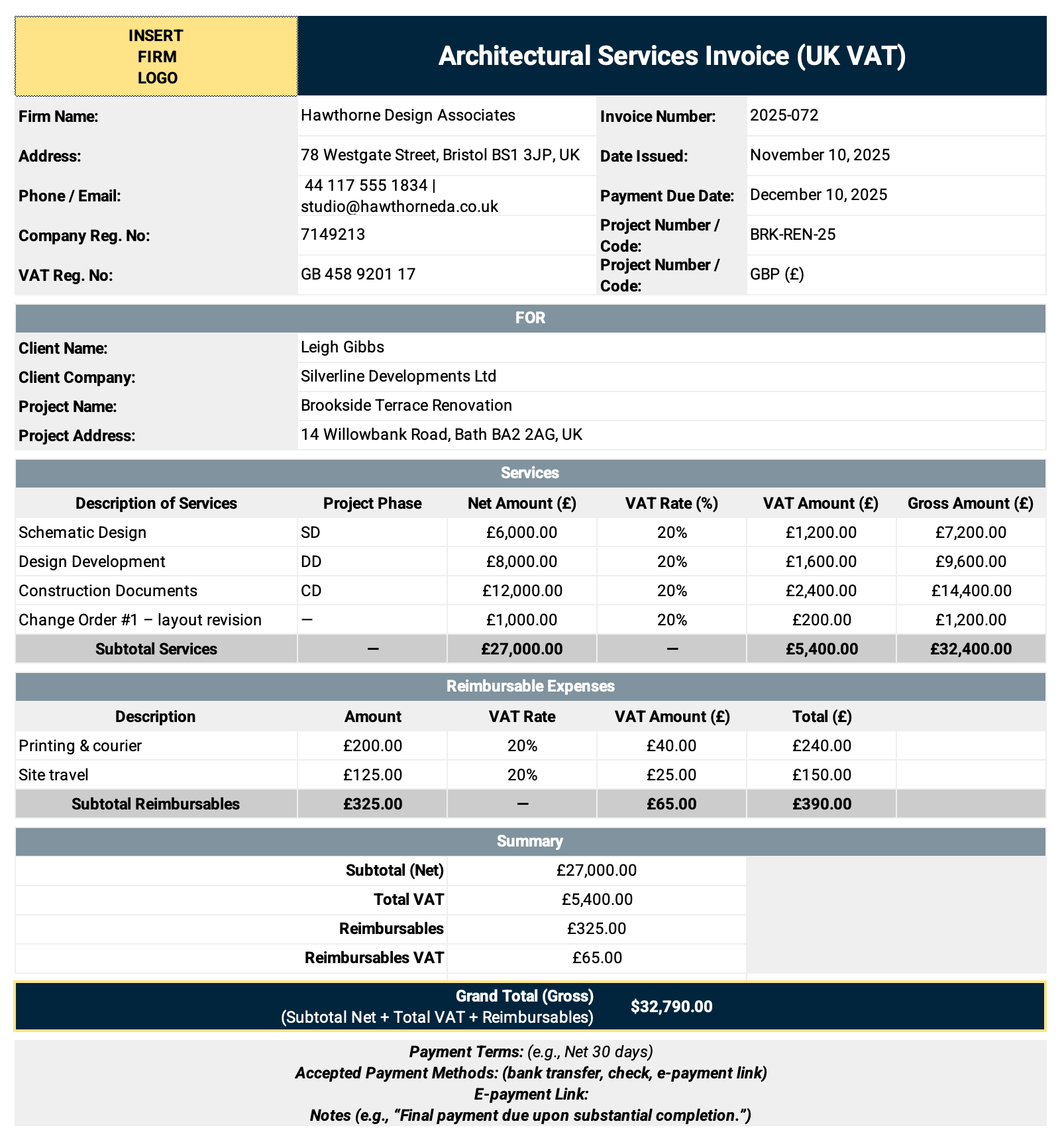 Example of a UK VAT architectural services invoice.
Download templates:Excel | Google Sheets
This UK VAT architectural services invoice template is for UK-based firms that need to include VAT details and registration information in their billing.
The basic invoicing template displays VAT registration number, VAT rate, subtotal before VAT, and total cost including VAT. It also includes an example UK VAT invoice for architectural services.
Basic Elements of any Architecture Invoice
An architecture invoice should do two things: communicate what’s being billed and reflect how architects actually work, so your clients can understand what they are being billed for. A good invoice presents firm and client information, project details, and a breakdown of services, phases, and expenses. The basic elements of any architecture invoice include:
- Company Information: Your firm’s name, address, contact info, and any license details needed by the client or jurisdiction.
- Client Information: The person or company’s address and project or job reference for ease of tracking.
- Invoice Details: A unique invoice ID number, issue date, and payment terms, plus any applicable late payment fees.
- Description of Services: List work completed by phase—schematic design, design development, construction documents, or construction administration—and summarize deliverables.
- Financial Summary: Show subtotal, taxes, reimbursables, retainage, and total amount due.
- Accepted Payment Options: Add all options, including e-payment links, to shorten the time to payment by more than a third.
- Project Phases and Codes: Use the standard phase abbreviations (SD, DD, CD, CA) for consistency in all your billing and project files.
- Reimbursables and Retainage: Separate reimbursable expenses and note any retainage withheld until completion.
For more, see our review of billing strategies for architectural firms and our ultimate guide to billing for AE firms.
Invoicing Best Practices for AE Firms:
Learn invoicing best practices for architecture firms to run more profitably.
Adapting Your Architecture Invoices for International Clients
Architectural invoices issued in other countries need to meet local tax and currency requirements. Your international billing should clearly show currency type, local tax details (such as VAT or GST), and the business registration numbers required by each region’s standards.
If you regularly work with international clients, you should create localized templates for architectural services. For example, an invoice in the UK must include the firm’s VAT registration number, the VAT rate applied, and the total both before and after VAT. UK invoices also typically list “net” and “gross” amounts separately to make tax calculations transparent.
Australian invoices should include the architect’s ABN (Australian Business Number) and a 10% GST line showing the tax rate and amount.
Other countries may require separate tax fields, currency conversions, or adjusted payment terms.
Easiest Way to Simplify Architecture Invoicing
Batch invoicing is one of the fastest ways architects can simplify billing, and it’s built directly into BQE CORE. The software lets managers review, approve, and send dozens of invoices simultaneously, saving hours every billing cycle. Guided tools automate details such as phases, rates, reimbursables, and taxes, so every invoice is accurate and professional with far less effort.
With BQE CORE invoicing, firms can customize invoices with their branding, apply billing structures by project or phase, and automate approval workflows. Time, expenses, and progress reports flow directly into each invoice, reducing administrative work and keeping every document consistent, correct, and ready for quick payment.
Schedule a BQE demo today to explore batch invoicing and other time-saving tools.
Simplify Your AE Batch Billing
See BQE CORE batch invoicing feature in action.
Architect Invoice FAQs
What does a typical architecture invoice include?
An architecture invoice lists firm and client details, project information, description of services by phase, reimbursable expenses, taxes or retainage, payment terms, and the total due. It should explain what work was done and how the fee was calculated.
How do you create an architecture invoice?
Get a professional template built for architects, such as the ones in this article. Add your firm and client information, project name, billing structure, and acceptable payment options. Review totals carefully, then send a clean, branded copy to your client.
What billing methods do architects use?
Architects bill by a fixed fee, their hourly rate, a percentage of construction cost, or by completed project phase. Many firms use a combination to fit each contract and client.
Why use an invoice template for architect billing?
A purpose-built template saves you time and gives you consistency. It includes standard architectural phases, reimbursables, and codes so invoices stay correct and compliant from one project to the next.
Why use architect invoicing software rather than a spreadsheet?
Software handles the details that spreadsheets miss, like automating time tracking, approvals, and payments. Tools like BQE CORE also generate batch invoices, automatically link expenses, and shorten payment cycles through built-in e-payment options.
Invoice templates are a great starting point. But as your firm grows, managing phases, reimbursables, retainage, approvals, and payments across multiple projects quickly becomes hard to scale with spreadsheets alone. That’s where purpose-built firm management software makes the difference. With everything connected, invoicing becomes faster, more accurate, and far easier to manage month after month.